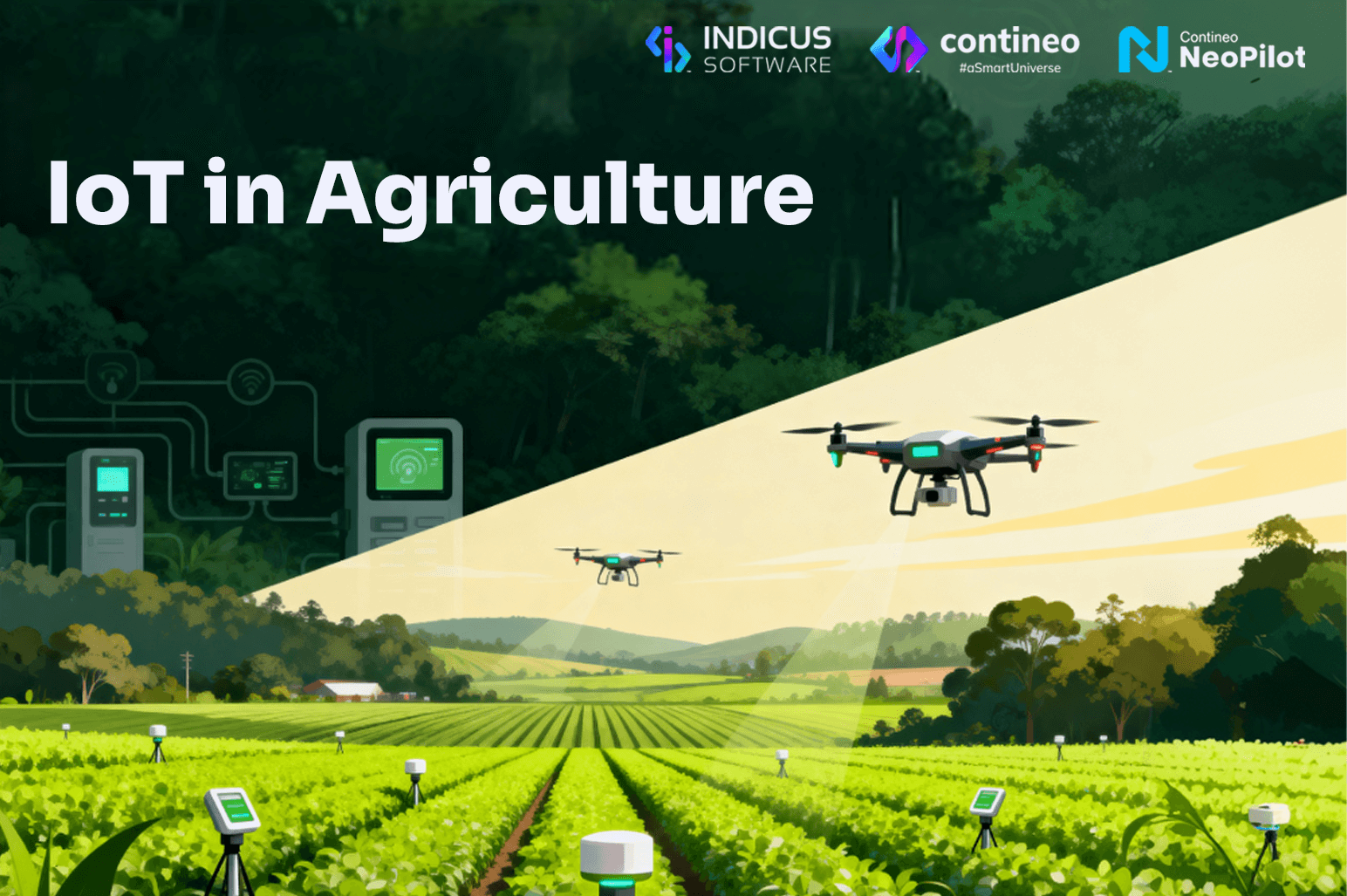
Agriculture is undergoing a profound transformation. What was once an industry guided by experience, intuition, and tradition is now rapidly becoming a data-driven ecosystem powered by connected devices, intelligent software, and predictive insights. Across the world, farms are adopting digital tools to solve long-standing challenges: climate variability, input cost inflation, labor shortages, post-harvest losses, and unpredictable markets.
At the heart of this transformation lies IoT (Internet of Things) a network of smart sensors, devices, and platforms that collect and analyze real-time data from every corner of the farm. When combined with AI-driven intelligence and low-code digital applications, IoT becomes one of the most powerful levers for building resilient, efficient, and sustainable agriculture systems.
This shift is not just about digitizing farming.
It is about unlocking a new way of growing food that is precise, predictable, and intelligent.
Why Does IoT Matter in Agriculture?
In agriculture, IoT devices could be soil sensors reading moisture levels, climate stations tracking temperature and humidity, GPS devices capturing tractor movements, or cold chain sensors monitoring perishable produce in transit.
But IoT becomes valuable only when this data is translated into decisions.
That is where modern platforms like Contineo (Low Code/No Code) and NeoPilot (Agentic AI) come into play. They turn sensor data into dashboards, alerts, workflows, and automated actions helping farmers, agribusinesses, and government bodies take timely and informed decisions.
With IoT, agriculture shifts from episodic monitoring to continuous visibility.
From reactive decisions to predictive intelligence.
From manual work to digital orchestration.
How IoT Works in Agriculture
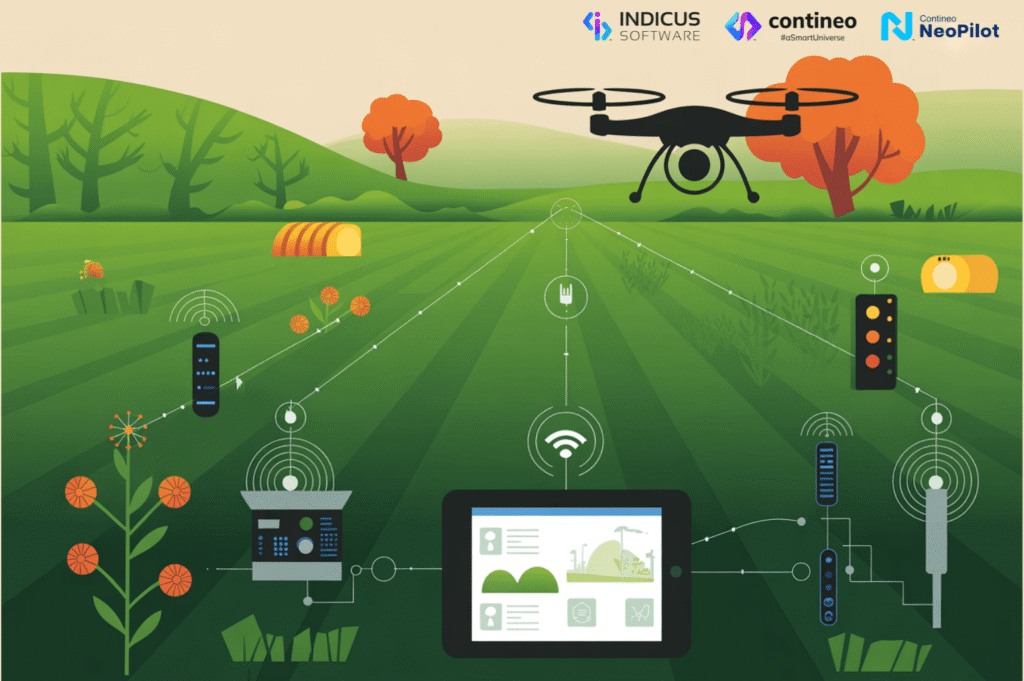
Imagine the farm as a living system. The soil breathes, crops grow, machines move, workers perform tasks, and produce travels through a supply chain. IoT allows this entire system to be “heard” and “interpreted.”
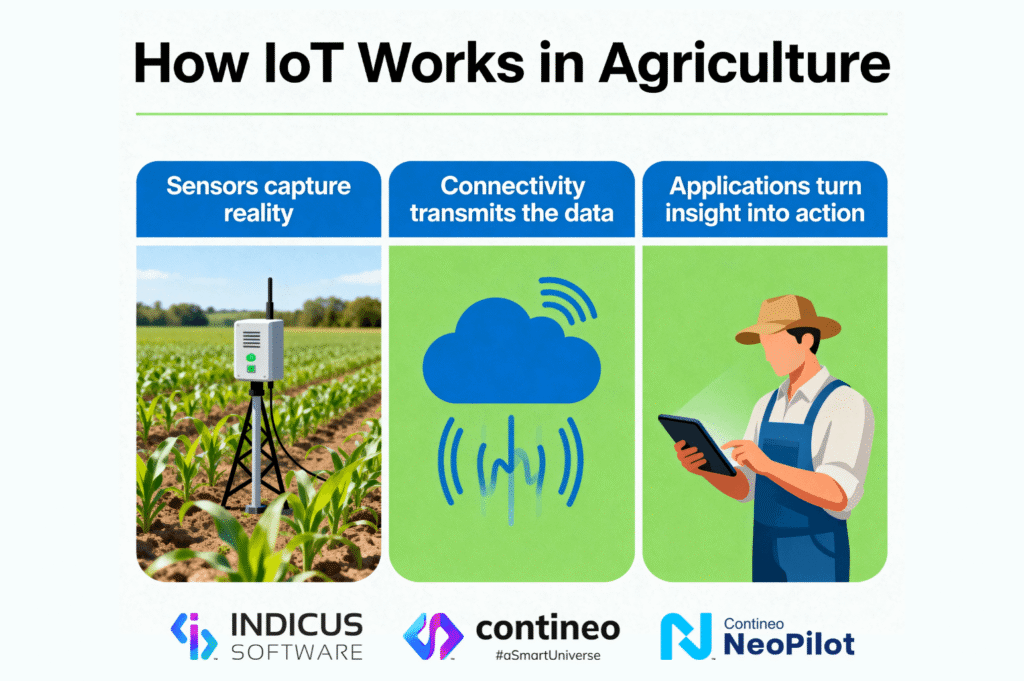
Here’s how it works:
Sensors capture reality; they measure soil moisture, crop stress, machine temperature, water flow, pesticide levels, or even fruit color.
Connectivity transmits the data through Wi-Fi, LoRaWAN, 4G/5G, or satellite.
Software analyzes the patterns detecting irregularities, predicting growth trends, or estimating risks.
Applications turn insight into action sending alerts, scheduling irrigation, logging data for compliance, or guiding workers through tasks.
This creates a cycle of awareness and action that makes agriculture smarter, faster, and more efficient.
Why IoT Is Becoming the Backbone of Smart Agriculture
Smart agriculture is not just about using digital tools it is about enabling farms to think and act intelligently. Sensors become the eyes and ears of the farm, AI becomes the brain, and low-code applications become the hands executing workflows.
A smart farm knows when to irrigate, how much fertilizer to apply, when a pest outbreak is likely, which worker performed which task, which batch traveled where, and how equipment is behaving at any moment.
This level of intelligence was impossible a decade ago. Today, IoT has made it not only possible but also scalable.
The Real Benefits of IoT in Agriculture
IoT brings value at multiple levels from crop health and resources to logistics and profitability. The biggest impact comes from predictability. Farming becomes less about assumptions and more about measurable outcomes. Water is saved, input costs go down, yields become more consistent, compliance becomes digital, and the overall operation becomes transparent.
But the true power of IoT emerges when it is paired with a platform that can convert data into structured workflows, automated tasks, and enterprise-grade insights. This is precisely where Contineo + NeoPilot stands out.
Real Agriculture IoT Applications
1. Smarter Farm Operations Through Connected Workflows
Running a farm often involves dozens of daily activities like irrigation checks, fertilizer application, field inspections, task assignments, and workforce coordination. Traditionally, these tasks are managed verbally or through paper-based methods, making it difficult to track or optimize them.
With IoT and digital applications, farms gain operational clarity.
A Farm Task Scheduling App allows managers to assign tasks digitally, track completion, and ensure accountability. Combined with IoT inputs, the app can show whether irrigation was performed on time or whether specific crop zones require attention. Labor productivity becomes transparent through the Workforce & Labor Tracking App, which records attendance, task duration, and work quality helping farms manage seasonal labor more effectively.
IoT also plays a crucial role in resource optimization. The Irrigation & Input Management System uses soil moisture and weather data to determine the right irrigation intervals. Instead of irrigating based on guesses, farms irrigate based on actual soil signals saving water, preventing over-watering, and improving crop health.
And when drones or field sensors provide high-resolution images or vegetation indices, the Drone/IoT Data Integration Dashboard translates them into simple, actionable insights. A part of the field showing water stress, nutrient deficiency, or pest hotspots becomes instantly visible turning precision agriculture into practical daily action.
2. Post-Harvest Quality and Supply Chain Visibility
Once crops leave the field, the challenge shifts to preserving quality and maintaining traceability.
A Farm-to-Fork Traceability App creates a digital identity for each produce batch. Every step harvest time, packing unit, transporter, cold storage chamber, retailer is documented automatically. This level of traceability boosts consumer trust and ensures compliance with export regulations.
Cold storage is another critical area where IoT has transformed outcomes. The Cold Chain Monitoring Dashboard uses sensors to track temperature variations throughout transportation and storage. A sudden temperature rise that could damage fruits or vegetables triggers an instant alert allowing quick corrective action.
Quality is equally important. Farms often grade produce based on size, color, or defects, but manual grading can be inconsistent. With the Produce Grading & Quality Tracking application, the process becomes standardized and recorded digitally. This not only improves quality but also enhances transparency for buyers.
Finally, moving produce efficiently is essential to prevent wastage. The Distribution Logistics Optimization solution uses IoT-based vehicle movement data to recommend better routes, reduce delays, and minimize spoilage during transit.
3. Intelligent Crop and Research Management
Agronomy and crop research rely heavily on accurate, consistent data. IoT and digital platforms bring scientific rigor to everyday farming.
For example, Crop Growth Simulation Models allow farms to visualize how a crop will behave under different conditions. This predictive capability informs decisions on irrigation, nutrient management, and harvest timing.
Similarly, the Yield Prediction & Forecasting App analyzes historical data, environmental patterns, and sensor readings to forecast harvest output. This empowers farm managers and procurement teams to plan inventory, negotiate contracts, and manage supply commitments with confidence.
For research-focused organizations, the Trial & Breeding Data Management application digitizes experimental trials. Data from sensors, lab observations, and field trials is captured automatically eliminating paper-based inconsistencies and accelerating breeding improvements.
The most immediate value comes from the Pest & Disease Early Warning Dashboard, which analyzes microclimate patterns and crop health signals to detect early signs of pest outbreaks. This prevents losses and avoids excessive pesticide usage.
4. Digital Quality, Safety, and Compliance Management
Food safety standards require meticulous record-keeping. IoT helps automate much of this burden.
A HACCP Compliance Tracker eliminates manual logbooks by digitally recording critical checkpoints from temperature controls to sanitation routines. Similarly, the Food Safety Audit App streamlines internal and external audits with mobile checklists and real-time reporting.
Chemical usage is closely monitored using the Chemical & Pesticide Usage Tracker, which logs applications, dosages, and compliance parameters as they occur in the field. Certification processes such as GAP or Organic become smoother with the Certification Workflow Management tool that organizes documents, approvals, and regulatory submissions.
IoT ensures that compliance becomes a continuous, automated process rather than a stressful, last-minute activity.
5. Equipment Intelligence and Machine Optimization
Farm machinery is expensive, and breakdowns can be costly. IoT sensors attached to tractors, sprayers, and harvesters provide data on movement, engine behavior, and fuel consumption.
An IoT Equipment Tracking System gives managers real-time visibility into machine locations and utilization patterns. If a machine idles for too long or is underutilized, it becomes immediately noticeable.
The Predictive Maintenance Scheduler uses sensor data vibration, temperature, runtime to identify early signs of mechanical wear. Instead of repairing equipment after failure, farms act proactively, reducing operational disruptions.
Fuel is another major cost. The Fuel Consumption Dashboard analyzes fuel usage patterns to identify inefficiencies, while Equipment Utilization Analytics helps farms maximize return on machinery investments.
6. Financial Decision-Making and Profitability Forecasts
With uncertainties in yield, weather, labor, and market prices, financial management becomes complex. IoT simplifies this by providing the data needed for accurate forecasting.
The Subsidy & Grant Tracking App digitizes the entire subsidy cycle—helping farms ensure they never miss opportunities.
The Farm Budget Planner helps manage expenses, plan input costs, and track cash flows.
The Loan & Credit Management Dashboard provides real-time visibility into repayments, liabilities, and financing needs.
But the most powerful tool is the Harvest Profitability Forecasting application, which combines yield predictions with input cost data to estimate profitability even before the harvest happens.
This gives enterprises a forward-looking financial advantage rarely available in traditional farming.
7. Environmental & ESG Management for Sustainable Agriculture
Sustainability is becoming mandatory for global supply chains. IoT provides the data backbone for accurate ESG reporting.
The Carbon Footprint Tracker measures emissions across various operations.
The Water Usage & Irrigation Efficiency App ensures responsible water usage.
The Soil Health Monitoring Dashboard tracks long-term soil fertility and nutrient balance.
Finally, the ESG Reporting Tool consolidates all environmental and social data into structured reports aligned with global frameworks.
This not only improves sustainability outcomes but also strengthens compliance and investor confidence.
Why Contineo + NeoPilot Are the Ideal Platforms for Agriculture IoT
Most IoT solutions work in isolation sensors here, a dashboard there, and manual processes everywhere. Contineo and NeoPilot solve this gap by creating a connected digital fabric across the entire agricultural value chain.
Contineo’s low-code platform builds applications rapidly without heavy custom development allowing enterprises to scale digital solutions across regions, crops, and teams. NeoPilot brings AI-driven agents that can read PDF reports, process field data, predict issues, and automate workflows without human intervention.
Together, they form a complete IoT + AI ecosystem that is modular, scalable, affordable, and field-ready.
This makes Indicus Software one of the few companies capable of delivering end-to-end digital agriculture transformation.
IoT Is Redefining the Future of Farming
IoT is no longer an add-on, it is becoming the foundation of modern agriculture. It enables farms to grow more with fewer resources, make decisions with confidence, reduce risks, and meet global standards for quality and sustainability.
Organizations that adopt IoT today gain a competitive edge that will define the next decade of agriculture.
With Contineo + NeoPilot, that journey becomes faster, easier, and significantly more impactful.
Ready to Build Your IoT-Powered Smart Agriculture Ecosystem?
Indicus Software can help you modernize every part of your agriculture value chain from field sensors to AI-driven workflows.