The global manufacturing sector is experiencing its biggest transformation since the advent of lean manufacturing. Companies worldwide are discovering that the key to operational excellence lies not in expensive automation alone, but in fundamental workplace organization principles. At the heart of this revolution is the 5S audit methodology, a time-tested approach that’s now being supercharged by digital transformation technologies.
The Critical Challenge Facing Modern Manufacturing
Manufacturing facilities across industries are struggling with persistent inefficiencies that directly impact their bottom line. Recent industry analysis reveals that manufacturers lose an average of 15-20% of their productive capacity due to disorganization, equipment downtime, and workplace safety issues. Workers spend up to 30 minutes per shift searching for tools and materials, while unplanned maintenance accounts for nearly 40% of total maintenance costs.
The root cause of these problems isn’t technological it’s organizational. Most manufacturers either rely on outdated paper-based audit systems or attempt to implement costly enterprise solutions that require months of setup. This gap between traditional auditing methods and modern operational demands has created a significant opportunity for improvement. Now Agentic AI with low-code development is rapidly transforming application development to help implement auditing at scale.
Understanding 5S Audit
Unlike traditional workplace inspections that simply check for compliance, 5S audit is a systematic evaluation methodology that transforms manufacturing environments through five interconnected principles. The approach originates from Japanese manufacturing practices and represents: Sort (Seiri), Set in Order (Seiton), Shine (Seiso), Standardize (Seiketsu), and Sustain (Shitsuke).
Modern 5S audit systems go beyond the traditional paper checklists by incorporating digital tools for real-time scoring, photographic evidence capture, and automated reporting. This digital transformation enables manufacturers to conduct comprehensive workplace assessments that identify inefficiencies, safety hazards, and improvement opportunities with unprecedented accuracy and speed.

Key Manufacturing Applications Driving Industry Transformation
Digital Audit Management Systems: Manufacturing companies are implementing audit based applications that enable supervisors to conduct 5S assessments with integrated photo documentation, QR code scanning for equipment identification, and real-time scoring algorithms. These systems reduce audit time by up to 70% while improving data accuracy.
Predictive Workplace Analytics: Advanced 5S audit platforms now incorporate thermography inspections and equipment condition monitoring, enabling facilities to identify potential failures before they occur. Companies report 25-30% reduction in unplanned downtime through these integrated approaches.
Cross-functional Safety Integration: Modern implementations extend beyond the traditional five S’s to include a sixth S for Safety, creating comprehensive workplace assessment frameworks that address both efficiency and regulatory compliance requirements simultaneously.
Using Contineo for Manufacturing 5S Audit Excellence
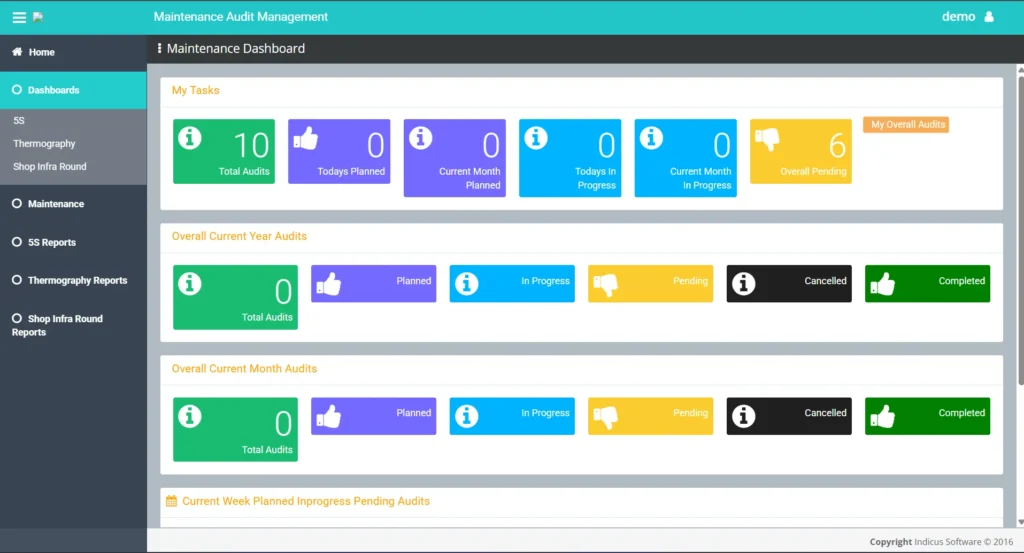
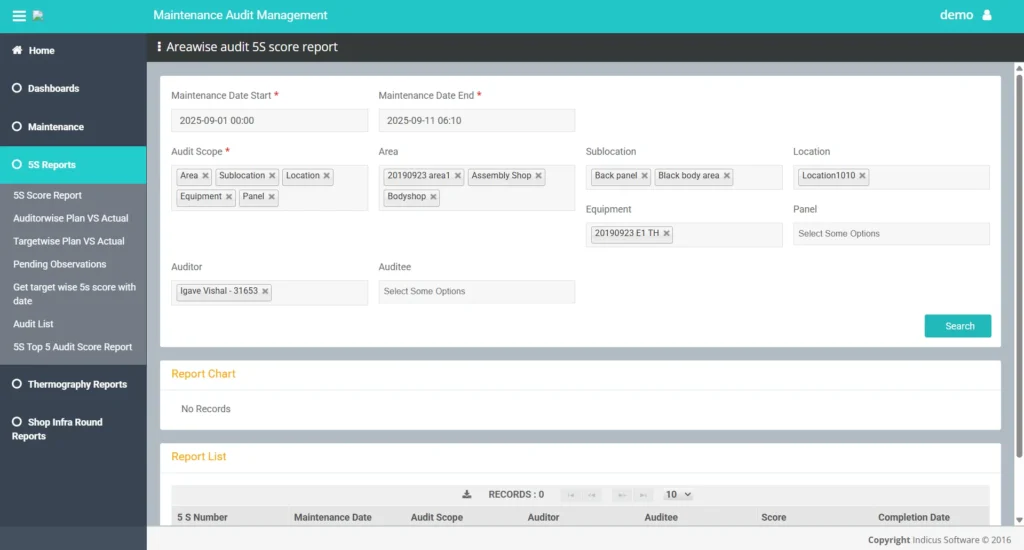
A leading manufacturing facility recently implemented a comprehensive integrated 5S audit and complaint management system. The implementation included three integrated dashboards: real-time audit scoring with monthly and yearly trend analysis, automated thermography and shop infrastructure audits with photographic evidence capture, and executive reporting showing facility-wide compliance status alongside complaint resolution metrics.
The system enables auditors to scan QR codes associated with specific areas or equipment, automatically populating customized checklists based on the audit target. Auditors can capture photographic evidence directly within the application, assign compliance scores using standardized criteria, raise complaints during audits if issues are discovered, and complete assessments in real-time. Employees can register complaints through the same platform, which are automatically assigned to appropriate personnel with instant notifications.
Comprehensive Benefits Achieved:
- Efficiency: Audit completion time decreased by 60%, while complaint resolution time was reduced from weeks to days
- Transparency: Real-time tracking of both audit and complaint statuses provided complete visibility across all organizational levels
- Accuracy: Elimination of manual data entry and paper trails improved data accuracy by 40%
- Responsiveness: Automated notifications enabled timely issue resolution, reducing operational delays
- Compliance: Standardized procedures ensured all audits and complaint resolutions were properly documented and tracked
The facility achieved consistently high 5S scores, established a culture of continuous improvement, and eliminated the paper trail challenges that previously hindered effective follow-up actions. This application development can also be enhanced by use of conversational AI development which can accelerate digital transformation initiatives without requiring extensive technical expertise.
The Future of Manufacturing Organization
5S audit isn’t just improving manufacturing facilities, it’s revolutionizing how companies approach operational excellence and employee engagement. As manufacturers face increasing pressure to optimize efficiency while maintaining safety standards, digital 5S audit systems provide the foundation for sustained competitive advantage.
Ready to transform your manufacturing operations through digital 5S audit implementation? Contact us to explore customized solutions for your specific operational requirements.